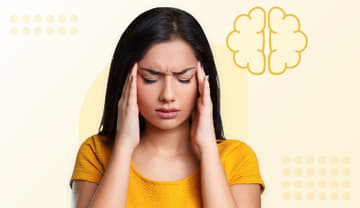
Migraine is a condition that causes intense, unprovoked pain, mostly on one or both sides of the head. Unlike a normal headache, it includes additional symptoms like nausea, vomiting, and sensitivity to light and sound. It is estimated that migraine affects around 12% of the global population (Burch RC, et al).
Migraine attacks can last for hours to days, and the pain can be serious enough to interfere with your daily life, such as your ability to work or study. Just about any movement or physical activity can worsen a migraine attack.
Women are more likely to have migraines as compared to men. The condition can begin in childhood or may not occur until early adulthood. Some people have more than one episode each week, while others have them only occasionally.
Medications can help prevent some migraines and make them less painful. Certain over-the-counter (OTC) pain-relief medications may be helpful for some headache types, but must not be overused. Moreover, medication overuse can make your attacks worse. The right medicines, combined with self-help remedies and lifestyle changes, can provide aid in managing migraine headaches.
The main symptom of a migraine is identified as an intense headache, more commonly on 1 side of the head. In some cases, the pain can occur on both sides of your head and may affect your face or neck. The pain is usually a moderate or severe throbbing sensation that gets worse when you move and prevents you from carrying out normal activities. Nausea and vomiting can frequently or infrequently accompany migraine headaches.
The symptoms of migraine differ from person to person. A migraine attack may last from hours to days and typically passes through four stages. These include:
Prodromal phase: Also known as the premonitory phase. In this stage, the symptoms tend to occur 24 to 48 hours before the onset of a headache. Some of the common symptoms seen in this stage include increased yawning, irritability, neck stiffness, craving for specific foods, and depression.
Aura phase: This is the phase in which the symptoms arise from the nervous system and often involve your vision. The symptoms may last anywhere between 5 minutes to a few hours. These include hallucinations, tunnel vision, temporary loss of vision, weakness in arms & legs, ringing in the ears, changes in speech and smell, taste, or touch.
NOTE: An aura is a group of sensory, motor, and speech symptoms that usually act like warning signals indicating that a migraine headache is about to begin.
Headache phase: It often begins as a dull pain that grows into throbbing pain which can start from one side of the head to the other. This phase can last for more than 3 days and may appear frequently.
Postdromal phase: It is also known as the recovery phase, which lasts up to a day after a headache. The symptoms include feeling tired, muscle pain/weakness, or lack of appetite.
Is it a migraine or a headache?
Migraine is more than just a headache. Here’s how to differentiate between a headache and migraine. The most common features that differentiate a migraine from a headache are POUND, where:
P means Pulsating pain
O means One-day duration of severe pain if left untreated
U means Unilateral (one-sided) pain
N means Nausea and vomiting
D means Disabling intensity
Causes Of Migraine
The precise cause of migraine is unknown, but it is believed to occur due to abnormal brain activity temporarily affecting nerve signals, chemicals, and blood vessels in the brain.
It's ambiguous as to what leads to this abnormal activity in the brain, but researchers speculate that your genes make you more likely to experience migraines as a result of a specific trigger. It is also reported that a higher level of the protein calcitonin gene-related peptide (CGRP) in blood causes inflammation and pain in the nervous system leading to migraine attacks.
Types Of Migraine
There are several types of migraine. These include:
1. Migraine without aura (common migraine)
There are no early symptoms. Pain is usually felt on one side of the head, often beginning around the eye and temple before spreading to the back of the head.
2. Migraine with aura (classical migraine)
About 20% of people experience early symptoms, called an aura, before a migraine episode, like vision changes, dizziness, confusion, feeling prickling skin, and weakness. Vision changes may include halos, sparkles or flashing lights, wavy lines, and even temporary loss of vision.
3. Status migrainosus
This is a severe and long-lasting migraine headache, also called an intractable migraine. These headaches affect less than 1% of people with migraine. However, they are intense and may stick around for longer than 72 hours.
4. Ophthalmoplegic migraine
This is a unique disorder characterized by recurrent attacks to a specific nerve in the brain (third cranial nerve) following severe migrainous headaches. The condition almost always begins in childhood and is believed to be rare in adults.
5. Retinal migraine
Retinal migraine events typically occur in one eye. Patients with retinal migraine frequently experience a negative visual phenomenon described as a graying or blackout of vision.
Triggers For Migraine
Nearly everyone with a migraine headache has one or more triggers. These triggers can vary in each individual. For such cases, maintaining a diary may help see if you can identify a consistent trigger.
Some of the most common triggers for a migraine headache are:
1. General triggers
Changing weather (humidity and heat)
Lack of sleep or oversleeping
Fatigue
Hormonal changes in women (before or during periods)
Mental and emotional stress
Traveling
Going out in the sun
2. Dietary triggers
Missing a meal
Alcohol, especially red wine
Chocolate
Aged cheese
An increase or decrease in caffeine
Monosodium glutamate or MSG
3. Sensory triggers
Bright or flickering lights
Loud noises
Strong smells like perfume or paints
These triggers can be dealt by using simple tips such as having your meals at the same time every day, not stepping out in unfavorable weather conditions, avoiding certain foods, and sleeping well for at least 7-8 hours.
Risk Factors For Migraine
You can have migraine or get migraine attacks with or without the below-listed risk factors. But, the more risk factors you have, the greater your chances of having migraine headaches. These risk factors include:
1. Female sex
There is no doubt that women tend to be at a higher risk of suffering from migraine as compared to men. However, the exact cause for this is not yet known.
2. Family history
Migraines tend to run in families. A child who has one parent with migraine has a 50% chance of inheriting it to the next generation. In the same lines, if both parents have migraines, the chances may rise up to 75%. Research tells us that about 90% of migraines can be attributed to a family history of the disease.
3. Lifestyle factors
Several lifestyle factors such as stress, tiredness, smoking, not getting enough exercise or sleep, medication overuse, and caffeine overuse are known to increase the risk of migraine.
4. Health conditions
Some of the common health conditions that can up your risk of migraine headache include obesity and depression.
Female gender and family history are non-remedial risk factors, which means one doesn’t have control on them. However, one can definitely seek help for medical conditions and bring about changes in lifestyle to reduce their risk of having migraines.
Diagnosis Of Migraine
There's no specific test to diagnose migraines. To know if you have migraine, your doctor will identify a pattern of recurring headaches along with the associated symptoms. You may have to be patient with your doctor as he may take some time to confirm the final diagnosis.
Clinical history and examination
On your first visit, after analyzing your detailed medical history, your doctor may check your vision, coordination, reflexes, and sensations. These will enable him to rule out or confirm some other possible underlying causes of your symptoms or conditions causing headaches.
They may ask if your headaches are:
On 1 side of the head.
A pulsating pain.
Severe enough to prevent you from carrying out daily activities.
Made worse by physical activity or moving about.
Accompanied by feeling and being sick.
Accompanied by sensitivity to light and noise.
Note: If you have headaches which are suspicious, your doctor might ask you to get a CT or MRI of the brain to rule out other disorders which can cause headaches resembling migraines.
Prevention Of Migraine
One of the best ways of preventing migraine attacks is by avoiding the triggers. Some suggestions include:
Have your meals at the same time every day.
Track the triggers which start the migraine pain and try to avoid them.
If weather conditions don’t favor, try to stay at home and fix your schedule accordingly.
Sleep well for at least 7-8 hours with dim or no lights.
Avoid using gadgets before going to sleep.
Avoid bright lights and extreme temperatures.
Avoid loud music and noisy places.
Avoid chocolates, cheese, processed food, alcohol, and smoking.
Avoid stress as much as possible.
Specialist To Visit
You should get in touch with your doctor if you have frequent or severe migraine symptoms that cannot be managed with the occasional use of over-the-counter painkillers. Try not to use painkillers frequently as this could lead to medication-overuse headache and make it harder to treat your condition over time.
You should also contact your doctor to seek preventive treatment if:
You have migraine episodes more than 3 times a month, even if they can be controlled with medicine.
You have a migraine which interferes with your daily activities.
If you are experiencing headaches or any other symptoms of migraine, you can visit:
General Physician (Family Doctor)
Neurologist
Consult India's best doctors online from the comfort of your home.
Treatment Of Migraine
There are many different medications used to treat and prevent migraines. However, natural treatments can also be used as alternatives or to supplement medical treatment.
The treatment for migraine is based on the severity of the migraine and the associated symptoms. Non-specific drugs such as analgesics and nonsteroidal anti-inflammatory drugs (NSAIDs) are the medicines of the first choice for mild or moderate migraine. Specific drugs such as ergot derivatives and triptans are also recommended to treat migraine in more severe cases depending upon the individual requirement. New class of drugs such as calcitonin gene-related protein (CGRP) antagonists and lasmitadin are given in case of acute attacks.
1. Nonsteroidal anti-inflammatory drugs (NSAIDs)
Non-steroidal anti-inflammatory drugs (NSAIDs) are the first choice of drugs for migraine. These medicines aid in relieving pain by inhibiting the synthesis of prostaglandins. Prostaglandins are compounds which are known to trigger an inflammatory response.
However, some patients may experience gastrointestinal side effects such as dyspepsia, abdominal burning or discomfort, and diarrhea. Some of the common examples of NSAIDs include:
This class of drugs are usually advised when other pain relievers such as NSAIDs fail to show any improvement in the symptoms or if the headache is severe. They work by constricting (narrowing) the blood vessels in the head, stopping transmission of pain signals to the brain, and blocking the release of chemicals that cause nausea and other migraine symptoms. Some of the commonly prescribed drugs in this category include:
This class of drugs acts as serotonin receptor antagonists. Just like triptans, they also work by constricting (narrowing) the blood vessels in the head, stopping transmission of pain signals to the brain, and blocking the release of chemicals that cause nausea and other migraine symptoms. They also inhibit the production of pro-inflammatory neuropeptide (chemical messenger) which is responsible for migraine pain. As these medicines cause vasoconstriction, these are not advised in people with hypertension and heart disease. Examples include:
If a migraine is associated with nausea or vomiting, then an antiemetic class of drug is prescribed for effective treatment. It is mostly prescribed in combination with an NSAID or triptan but can also be used as monotherapy. Common examples of antiemetics include:
Patients admitted to an emergency room with severe migraine headaches associated with nausea and vomiting are advised to take sumatriptan or antiemetics/dopamine receptor blockers to manage the condition.
5. CGRP antagonists
This is a new class of drug used to treat and prevent migraine attack. The medication works by blocking the activity of the protein known as calcitonin gene-related peptide (CGRP). CGRP may cause pain and inflammation which may further worsen the migraine attacks. It is available in the form of an injection. Examples include:
Erenumab
Fremanezumab
6. Lasmiditan
It is a newly approved drug for the treatment of acute migraine. Lasmiditan acts as a selective serotonin receptor without causing vasoconstriction (narrowing of the blood vessels), unlike triptans. Hence, this medicine can also be advised for people with cardiovascular risk factors, heart disease, and those who respond poorly to the current treatment of migraine. It is available in the form of a pill.
7. Prophylactic therapy
There are certain classes of medicines which are used to prevent future attacks of migraine. These drugs are given in cases where there is/are:
Frequent or long-lasting migraine headaches
Migraine attacks that cause significant disability or diminished quality of life despite appropriate acute treatment
Contraindication, failure or serious adverse effect with therapies used for acute attacks
CGRP antagonists like erenumab and fremanezumab (in refractory cases)
NOTE: It is never advised to self-medicate as these medicines have a range of harmful side effects. Also, frequent use of painkillers to relieve migraine could lead to medication-overuse headache.
Home-care For Migraine
1. Watch what you eat
Foods that contain tyramine, a natural amino acid, may trigger your migraine headaches. Some of the foods containing tyramine are aged cheese, nuts, and chicken livers. Below is a list of some examples of foods rich in tyramine that can be consumed with caution or avoided.
Food groups: Meat, fish, poultry, & eggs Use with caution: Sausage, bologna, meats with nitrates or nitrites added. Avoid: Aged, dried, fermented, salted, smoked, or pickled products. Pepperoni, salami, and liverwurst. Non-fresh meat or liver and pickled herring. Food groups: Dairy Use with caution: Yogurt, buttermilk, sour cream Avoid: Aged cheese: cheddar, Swiss, mozzarella
2. Build a healthy routine
Get at least eight hours of sleep daily.
Exercise regularly.
Avoid skipping meals and eat small frequent meals throughout the day.
Stay well hydrated. Drink 6-8 glasses of water daily.
Avoid stress.
Try muscle relaxation exercises like meditation or yoga.
Take your medications as advised by your doctor.
Identify your triggers and try to avoid them.
NOTE: Keep a headache diary to learn about what triggers your migraines and what treatment is most effective.
3. Other home-based solutions
You can try out some of the below options to relieve a migraine headache at home:
Take some time off: Do not let the fast-paced life take a toll on your life. Instead, make sure you take a break and relax right away when you feel being hit by a headache.
Try heat therapy: Place a hot compress such as a towel soaked in warm water on your forehead and relax in a room with dim or no lights.
Yoga: Yoga asanas that can help relieve the tension and ease headache include seated neck release, viparita karani, adho hastapadasana (standing forward bend), setu bandhasana (bridge pose), shishuasana (child pose), marjariasana (cat stretch), paschimottanasana (two-legged forward bend), adho mukha svanasana (downward facing dog pose), padmasana (lotus pose), shavasana (corpse pose), etc.
Massage using essential oils: Gently massage the area where the eyebrows meet and the temples, with the knuckles to improve circulation and treat headaches. Use exotic essential oils like peppermint oil, basil oil, and lavender oil.
Alternative Therapies Of Migraine
1. Ayurvedic Remedies
Ayurveda can play a crucial role in managing headaches and improving other symptoms of migraine. You can find all these natural ingredients in your kitchen to help you with migraine. These include:
1. Ginger: A well-known remedy for headaches, it reduces inflammation of the blood vessels of the head, thereby relieving headache. Smash ½ an inch of ginger and brew a cup of tea with it and see the effects. It also aids digestion and reduces the feeling of nausea that occurs during migraines.
2. Lemon: Rich in antioxidants, lemon juice soothes irritated sinuses that helps reduce headaches. Prepare a cup of tea with the juice of a lemon and honey and have it warm. One may also grind the skin of lemons and apply it on the temple for alleviating headaches.
3. Pepper: It will reduce inflammation and decongest the nose that will ultimately help you breathe freely and get rid of the headache. Try a hot bowl of soup with a dash of ground pepper.
4. Cinnamon: Cinnamon reduces the effect of inflammatory markers in blood vessels, thereby reducing the frequency, severity, and duration of pain attacks. Make a thick paste of cinnamon and water and apply to the forehead to get relief from headache.
Check out some of the common herbs whose benefits have been backed by science for migraine relief. Click here to know more!
2. Acupuncture
Acupuncture is a traditional Chinese medicine therapy that involves inserting thin needles into specific points on the body, known as acupoints, to ease pain. Although the exact action mechanism is not known, it is believed that this therapy reduces nerve activity to modulate pain response and transmission. Ear acupuncture, a type of acupuncture, is also known to ease migraine pain in people without aura attacks.
3. Neuromodulation techniques
In this, electrical stimulation is delivered to the targeted sites to alter nerve activity and relieve pain. Single pulse transcranial magnetic stimulation, a noninvasive neuromodulation technique, is the most widely used method to treat migraine pain.
Living With Migraine
Living with migraine is a duanting task as not many people realise how much pain you go through on a regular basis as you put a smiling face. Although it is understandable to feel angry and defeated, training yourself to look at things positively can help you to manage it better and improve your quality of life. Moreover, people with migraines do not come out in the open due to the stigma. But one thing you must bear in mind is making simple changes in your routine life to lead a better and happy life. Here are a few tips that people living with migraine can follow to improve their condition and fight migraine attacks.
1. Always be positive
You may feel angry and helpless with migraine but that will not help and only add up to worsen the condition. So, do not let negative feelings harm you. Instead, train your brain to be happy and positive to improve your condition.
2. Learn about your condition
Suffering from migraine is not anyone’s fault, so instead of blaming yourself, it is wise to learn and educate yourself about the condition. However, do not search online about it but talk to your doctor about the condition, its medication, triggers, and ways you can help you or your closed ones to fight the condition.
3. Find the right doctor
Just like getting the right medicines is necessary to fight a condition, getting in touch with the right doctor is of utmost importance when it comes to dealing with migraine. Be it calling your doctor when you have sudden and severe migraine attacks or just asking him/her about medicines, your doctor can play a key role in treating your condition and preventing future attacks/complications.
4. Join a support group
Just the mere idea of sharing your thoughts and talking to someone who knows about migraine gives you relief. So joining a support group can be of great help as it helps you to connect with people suffering from migraines and share your concerns or queries with like-minded people. Joining online communities and participating in their workshops can help you to understand more about the real-life experiences and share your stories with them.
5. Indulge in self-care
Thinking about migraine day-in and day-out can be very taxing on your mental health as well. So instead of physically burdening yourself with added work at home or office to divert your mind or mentalling straining yourself, try out different activities to keep yourself occupied. These activities include listening to music in your free time, enjoying time with your pet/friends, taking a stroll in a park, or sharing workload with your partner when you are stressed. Making these simple tweaks to your everyday life can be of great respite.
It isn't justified to change your doctor frequently. No one can cure migraine but with meds these migraine bouts can be managed and frequent episodes can be converted to less frequent one.
Whatever is the trigger, you need to know about the types of headache and watch out for signs that indicate you should consult a doctor immediately.
To know more about the types and when to visit a doctor for a headache, read the article.
Migraine and comorbidities
1. Migraine and stress: The International Headache Society doesn’t classify stress migraine as one of the types, however, stress is a known trigger for migraine. So if you feel stress is the trigger for your headache, you can try relaxation techniques like deep breathing, meditation, or yoga to calm down.
2. Migraine and nausea: Nausea is one of the most common symptoms seen in almost half of the people suffering from migraine. Taking antiemetic drugs can help to deal with this symptom, but if you also experience vomiting along with a headache, then it is wise to consult a doctor and get it treated. You can even try home remedies such as ginger, lemon, cinnamon, etc to deal with it.
3. Menstruatal-related migraine: More than 50% of the women who suffer from migraine tend to experience menstrual-related migraine. As the name suggests, migraine can occur before, during, or after menstruation. This could be due to a sudden shift in the hormones during periods.
Can chocolates cause migraine?
Not really. There are many triggers of migraine which include foods too. Chocolate doesn’t cause migraine on its own but can aggravate migraine.
Celebs affected
Suniel Shetty
Bollywood actor Suniel Shetty revealed in many interviews online that he suffered constant migraine attacks at some point but is coping well now with medicines.
Frequently Asked Questions
Most people who have migraines find that their headaches get better with the preventive treatment and lifestyle changes. Though there is no definitive cure for migraine, treatment can successfully lower the frequency and severity of attacks and also help relieve symptoms. Avoiding triggers that cause your headache can also provide substantial benefits.
Yes, children may also get migraines. However, pediatric migraines are often for a shorter duration. Children with migraine usually experience symptoms such as stomach aches.
Yes, migraine headaches run in families. If one of your parents has migraine, then you have a 50% chance of being diagnosed with it. However, if both the parents have migraine, then your chance of inheriting it goes up by 75%.
It varies from person to person and also the type of migraine you suffer from. However, in most cases, a migraine attack can last from several minutes to a few hours and go upto 3 days. In severe cases, it may even last for around 3-4 days. Also, you may even get frequent migraines which can range from 2-3 headaches per month to 1-2 per year.
When you experience a migraine attack, it usually starts as a pulsating pain that affects one or both sides of the head with a disabling intensity that increases with time. You may even experience nausea and vomiting along with headache. Other symptoms include increased yawning, irritability, neck stiffness, craving for specific foods, and depression.
There are certain foods items that can worsen a migraine headache. These may include chocolate, nuts, peanut butter, banana, onions, dairy products, and pickled foods. It is considered to be wise to stay away from these foods if you suffer from migraine.
Yes. Although migraine typically starts at a young age, basically around puberty, it is known to be active during adulthood. This is why people in their prime years, the age group of 20-40 years, are known to experience severe migraine attacks.
Migraines tend to reduce significantly after the age of 45 particularly in females. A new-onset headache in an older individual is unlikely to be a migraine.
The fastest way to get rid of a migraine is to take medicines such as analgesics, nonsteroidal anti-inflammatory drugs (NSAIDs, ergot derivatives, and triptans). These are recommended to treat migraine depending upon the severity of the condition. Medicines are available to treat acute migraine and prevent future attacks too. But, it is advisable to avoid self-medication. Get an expert’s advice to know which medicines would be best in your case.
It is seen that migraine usually peaks in your thirties and forties. Post that age, an improvement in the severity of the symptoms is generally observed. This is attributed to changes in the frequency of variables, such as stress. Also, the symptoms such as photophobia, phonophobia, dizziness, throbbing, pressure, stabbing, and being forced to sleep or rest with headache also decline with age. People above the age of 50 years are known to experience lesser acute migraine attacks.
As you might be aware of, with age, your triggers and severity of the migraine attack increases until you reach your 50s. So when you are in your peak years, there are high chances of being stressed, which is a known trigger. Also, hormonal changes in women in her 30s - 50s also tend to increase the risk of migraine headaches. In addition to this, the common triggers that can lead to migraine range from lack of sleep to dietary and environmental factors.
In our relentless endeavour to keep improving our services, you are our eyes. Kindly take out sometime to guide us on how to serve your better.
Subscribe to stay informed
Subscribe to our carefully crafted informative emailers by Medical Experts and be the first to get the latest health news, tips and important updates.
Want to know more?We provide you with authentic, trustworthy and relevant information
Have issues with the content?
Disclaimer
Tata 1mg's sole intention is to ensure that its consumers get information that is expert-reviewed, accurate and trustworthy. However, the information contained herein should NOT be used as a substitute for the advice of a qualified physician. The information provided here is for informational purposes only. This may not cover all possible side effects, drug interactions or warnings or alerts. Please consult your doctor and discuss all your queries related to any disease or medicine. We intend to support, not replace, the doctor-patient relationship.