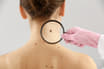
Melanoma is a cancer of the cells which give color to skin, called the melanocytes. It can be more threatening than the other forms of skin cancer because it tends to metastasize or spread to other parts of the body, causing serious complications.
Risk factors for melanoma include fair skin, light hair and light-colored eyes, a history of prolonged and fierce sun exposure, close family members with melanoma, and moles that are irregular and large in size and number.
Early detection and diagnosis of melanoma are crucial. Changing or unusual spots on the skin should be brought to medical attention without delay. Diagnosis is usually done by a biopsy in which a piece of skin containing the pigmented tumor is removed for lab analysis.
Caught early, most melanomas can be managed with relatively minor surgical removal. However, treatment at the later stages becomes challenging and mostly comprises surgery, chemotherapy, radiation, immunotherapy, and targeted therapy.
Overview
Key Facts
Symptoms
Types
Causes
Risk factors
Diagnosis
Celebs affected
Prevention
Specialist to visit
Treatment
Home-care
Complications
Alternatives therapies
Living with
FAQs
Frequently Asked Questions
No, melanoma is not always fatal. If detected in earlier stages, melanoma is highly treatable However, if it is left undetected, it can become malignant and spread to other parts of the body.
The exact cause of melanoma is unknown, but prolonged exposure to UV rays is seen as one of the major causes.
Yes, melanoma is a type of skin cancer. Some other skin cancer types include basal cell carcinoma and squamous cell carcinoma. Melanoma itself is of two different types, namely metastatic melanoma and nodular melanoma.
Yes, sometimes melanoma can take over decades to grow. It depends on the type of melanoma you have. Nodular melanoma grows rapidly while radial melanoma takes its time to spread.
Melanoma first starts spreading to the lymph nodes. After that, it can go into the blood, brain, or several different organs.
Stage IV melanoma has a survival rate of about 15 to 20 percent. But the survival of any cancer patient is dependent on several factors.
Did our information help you?
In our relentless endeavour to keep improving our services, you are our eyes. Kindly take out sometime to guide us on how to serve your better.
Subscribe to stay informed
Subscribe to our carefully crafted informative emailers by Medical Experts and be the first to get the latest health news, tips and important updates.
Want to know more?We provide you with authentic, trustworthy and relevant information
Have issues with the content?
Disclaimer
Tata 1mg's sole intention is to ensure that its consumers get information that is expert-reviewed, accurate and trustworthy. However, the information contained herein should NOT be used as a substitute for the advice of a qualified physician. The information provided here is for informational purposes only. This may not cover all possible side effects, drug interactions or warnings or alerts. Please consult your doctor and discuss all your queries related to any disease or medicine. We intend to support, not replace, the doctor-patient relationship.
Several symptoms can indicate the presence of melanoma in your body. However, few common symptoms of melanoma can overlap with those of several skin cancer types. Nevertheless, several symptoms are specific to melanoma.
Melanoma can start developing in any part of your body. But it is most commonly seen in the areas, which are exposed to the sun. These body parts include the face, legs, arms, and back.
People who have a darker skin shade can also have melanoma developing in areas with less sun exposure. These body parts include the palms of your hand, the fingernail beds, and the soles of your feet. These are known as hidden melanomas.
Some of the earliest symptoms of melanoma can be:
A change or development in a pre-existing mole
A new mole, pigmented skin, or growth starts developing on your skin
However, it is important to note that melanoma doesn’t always start from a mole. There are some easy ways to differentiate between a normal mole and a mole that can become carcinogenic. To remember this, all you need to think of are the letters ABCDE:
‘A’ stands for asymmetry: A mole that has a chance of becoming cancerous will most likely have an asymmetrical shape. Therefore, the mole will not have identical halves and will look like it has no particular shape.
‘B’ stands for border: In a cancerous mole, the border will be irregular. It will not be circular or oval, like normal moles. Instead, it might have a notched or scalloped border.
‘C’ stands for color: Carcinogenic moles can change colors with time. Try looking for unusual growths that have different colors instead of one particular color. Some of these moles might have a single color, but they might be unevenly distributed, which can also be an indication.
‘D’ stands for diameter: Usually, moles are about ¼ inch or 6 millimeters. Anything larger than that can be carcinogenic.
‘E’ stands for evolving: The most significant indicator of a cancerous mole is that it changes over time. Try to see if the mole grows in size or changes its colors. It might even change its shape or become itchy. In some cases, one might even note bleeding.
Is it skin cancer? Read more about 6 usual signs you need to be aware of.
Types Of Melanoma
Melanoma can be classified into the following types:
1. Cutaneous (skin) melanoma
There are four major types of cutaneous melanoma:
Superficial spreading melanoma: This is the most common form of the disease, responsible for about 70% of cases. This type usually develops in a pre-existing mole.
Nodular melanoma: This is the second most common, responsible for 15 to 30% of cases. These are more aggressive and usually develop more rapidly than superficial melanomas.
Lentigo maligna: This type of melanoma appears as large, flat lesions most commonly found on the faces of light-skinned women over the age of 50. This form of melanoma, responsible for about 4% to 10% of cases, has a lower risk of metastasis than other types.
Acral lentiginous melanoma: This occurs on the palms, soles of the feet or beneath the nail beds. They account for only 2% to 8% of melanomas in fair-skinned patients, but up to 60% of melanomas in darker-skinned patients. This type of melanoma is extremely aggressive and large, with an average diameter of three centimeters.
2. Mucosal melanoma
Mucosal melanomas are rare, making up only about 1% of all diagnosed melanoma cases. This disease occurs in mucosal tissue, which lines body cavities and hollow organs like the nasal cavity, mouth and esophagus, rectum, urinary tract and vagina. It can be very hard to detect, and even when diagnosed and treated, the prognosis is poor.
3. Ocular melanoma
Because the eyes contain melanocytes, or pigment producing cells, they can be susceptible to melanoma. Two types of ocular melanoma include:
Uveal melanoma: It is a cancer (melanoma) of the eye involving the iris, ciliary body, or choroid (collectively referred to as the uvea).
Conjunctival: This is the melanoma of the conjunctiva that presents as a raised, pigmented or nonpigmented lesion that appears in adult life.
Causes Of Melanoma
Melanoma occurs when there is a problem with the melanocytes present in your body. Melanocytes are the cells that produce melanin, which gives color to your skin. Melanoma generally begins through moles, but most moles are not carcinogenic.
Usually, healthy cells push the old cells through your skin, where they perish and fall off. But when cells have DNA damage, the new cells start multiplying abnormally and accumulate around the old cells, creating a cluster of cancerous cells.
Even after several years of research, scientists have not pinpointed a precise reason behind melanoma development in a person. But there could be several factors that might be responsible for melanoma.
The cancerous moles can be a result of DNA mutations. DNA mutations can cause different types of cancers.
The gene mutations resulting in melanoma can be of two types:
1. Acquired gene mutations
Generally, the gene mutations that result in melanoma are acquired during a person's life rather than getting inherited. Sometimes these changes can occur randomly without any specific reason. But at other times, it can be linked to an external cause.
One of the most common causes attributed to melanoma development is exposure to ultraviolet rays (UV). UV rays can damage skin cells and affect the genes responsible for cell growth, making them cancerous.
Usually, UV ray exposure is because of the sun, but sometimes it can be caused by manufactured products such as tanning beds and tanning lamps. UV ray exposure does not cause cancer immediately - it might take several years to develop and manifest. Hence, melanoma is more common in adults rather than in children or teenagers.
When melanoma develops in areas with no sun exposure, it is usually due to changes in different genes rather than the ones exposed to the sun. They can also be due to several environmental factors, but the most probable cause is genetic changes.
2. Inherited gene mutations
People can also inherit the gene changes that are responsible for melanoma from their parents. However, this is a rare scenario. These people have specific DNAs that are more likely to develop melanomas, especially in regions exposed to the sun.
Risk Factors For Melanoma
There are several risk factors for melanoma. Some of these include:
1. Dysplastic moles
A dysplastic nevus is a type of mole that looks different from a common mole (nevi). The risk of melanoma is greatest for people who have a large number of dysplastic nevi. This risk is high especially for people with a family history of both dysplastic nevi and melanoma.
2. Fair skin
Melanoma occurs more frequently in people who have fair skin that burns or freckles easily (these people also usually have red or blond hair and blue eyes) than in people with dark skin.
3. Ethnicity
Studies show that caucasians get melanoma far more often than do black people, probably because light skin is more easily damaged by the sun.
4. Personal or family history of melanoma or other skin cancers
People who have been treated for melanoma have a high risk of a second melanoma. Melanoma sometimes runs in families. Having two or more close relatives who have had this disease is a risk factor. When melanoma runs in a family, a doctor should check all family members regularly.
People with this inherited condition have many dysplastic nevi. If at least one close relative has had melanoma, this condition is called as familial atypical multiple mole and melanoma syndrome, or FAMMM.
6. Age
Melanoma is more likely to occur in older people, but it is also found in younger people. The median age of melanoma is around 50 years, which means that about half of people with melanoma are diagnosed when they are younger than 50 and about half are diagnosed when they are older than 50. Melanoma that runs in families may occur at a younger age.
7. Ultraviolet (UV) radiation
Experts believe that melanoma is related to an increase in the amount of time people spend in the sun. This disease is also more common in people who live in areas that are at higher altitudes.
8. Indoor tanning
People who use tanning beds, tanning parlors, or sun lamps have an increased risk of developing all types of skin cancer. Using indoor tanning devices is strongly discouraged.
9. Severe, blistering sunburns
People who have had at least one severe, blistering sunburn as a child or teenager are at increased risk of developing melanoma. Sun protection may reduce the risk of melanoma later in life. Sunburns in adulthood are also a risk factor for melanoma.
Are you getting sunburns? Read more about natural remedies for sunburns.
10. Weakened immune system
People whose immune system is weakened by certain cancers, by drugs given following organ transplantation, or by HIV are at increased risk of developing melanoma.
The risk to cancer patients due to COVID-19! Any infection can possibly affect a cancer patient more than any healthy individual. For the patients undergoing chemotherapy, it is all the more challenging. Even amongst cancer patients, children are at maximum risk of getting affected due to this infection.
Know about COVID -19 care plan.
11. Other inherited conditions
People with specific inherited genetic conditions have an increased risk of developing melanoma. These conditions include:
Xeroderma pigmentosum: It is an inherited condition characterized by an extreme sensitivity to ultraviolet (UV) rays from sunlight.
Retinoblastoma: It is cancer of the retina.
Li-Fraumeni syndrome: It is a rare hereditary or genetic disorder that increases the risk of developing cancer.
Werner syndrome: This syndrome is characterized by the dramatic, rapid appearance of features associated with normal aging.
Hereditary breast and ovarian cancer syndromes: It is a genetic condition that makes it more likely for a person to get breast, ovarian, and other cancers.
12. Socioeconomic status
Lower socioeconomic status has been linked to more advanced cases of melanoma at the time of detection.This could be because low socioeconomic status individuals have less risk perception and knowledge of the disease.
Diagnosis Of Melanoma
Several tests and procedures can be conducted to diagnose melanoma. Some of the standard tests include:
1. Physical exam
The doctor will first ask you various questions about your medical and health history. After that, they will inspect your skin to find any symptoms or signs that might indicate melanoma.
2. Biopsy
If the doctor finds a part of the skin that might be suspicious, they will examine that part of the skin. The doctor might take a tissue sample from that part of the skin and send it to a lab for biopsy. Types of biopsy include:
Shave (tangential) biopsy: A shave biopsy is useful in diagnosing many types of skin diseases and in sampling moles when the risk of melanoma is very low.
Punch biopsy: The doctor rotates the punch biopsy tool on the skin until it cuts through all the layers of the skin. The sample is removed and the edges of the biopsy site are often stitched together.
Excisional biopsy: It is done to examine a tumor that might have grown into deeper layers of the skin.
Incisional biopsy: An incisional biopsy removes only a portion of the tumor.
3. Biopsies of melanoma that may have metastasized (spread)
Biopsies of areas other than the skin may be needed in some cases. For example, if melanoma has already been diagnosed on the skin, nearby lymph nodes may be biopsied to see if cancer has spread to them. These include:
Surgical (excisional) lymph node biopsy: This procedure can be used to remove an enlarged lymph node through a small incision (cut) in the skin.
Sentinel lymph node biopsy: If melanoma has been diagnosed and has any concerning features (such as being at least a certain thickness), a sentinel lymph node biopsy (SLNB) is often done to see if the cancer has spread to nearby lymph nodes, which in turn might affect treatment options.
4. Imaging tests
Imaging tests can also be done to help determine how well treatment is working or to look for possible signs of cancer coming back (recurring) after treatment. These include:
Chest x-ray: This test might be done to help determine if melanoma has spread to the lungs.
Ultrasound: It uses sound waves to create images of the inside of your body on a computer screen.
CT-guided needle biopsy:CT scans can also be used to help guide a biopsy needle into a suspicious area within the body.
Magnetic resonance imaging (MRI) scan: MRI scans use radio waves and strong magnets instead and can be very helpful in looking at any tumor in the brain and spinal cord.
Positron emission tomography (PET) scan: A PET scan can help show if the cancer has spread to lymph nodes or other parts of the body. It is most useful in people with more advanced stages of melanoma.
PET/CT scan: This lets the doctor compare areas of higher radioactivity on the PET scan with the more detailed appearance of that area on the CT scan.
5. Blood tests
Blood tests aren’t used to diagnose melanoma, but some tests may be done before or during treatment, especially for more advanced melanomas. These include:
Make sure to get the right diagnosis with reliable medical test.
Prevention Of Melanoma
There are several different ways to reduce the risk of getting melanoma and all other types of skin cancer.
1. Do not go out in the middle of the day
The sun is at its highest point during the middle of the day. It means that the sun's rays are more direct, which increases the chances of UV light exposure. UV light radiation is one of the primary risk factors for melanoma. To lower your chances of getting skin cancer, you should not go out often between 10 am and 4 pm. If you have to go out during the day, try to seek as much shade as possible.
2. Avoid getting suntans or sunburns
Accumulated sun exposure over your life can cause skin cancer later in life. Remember, there is no such thing as a healthy suntan and a blistering sunburn can significantly increase the chances of getting melanoma.
4. Wear sunscreen all year long
Wearing sunscreen is one of the easiest ways to avoid getting a suntan or sunburn and protect your skin against the sun's UV rays. You should wear sunscreen all year long, even when the sky is cloudy. Ensure that the sunscreen has an SPF higher than 30 if you are out in the sun for extended periods. Also, reapply every two hours if you sweat or swim.
Use sunscreen before going out in the sun! If you are trying to avoid getting melanoma in the future, the best way to ensure the safety of your skin is by regularly applying sunscreen. If you are going out for longer hours, get water-resistant sunscreen that has an SPF of 30 or higher.
Learn the basics of using sunscreens the right way.
5. Cover yourself
Always cover yourself completely when going out in the sun. Wear full-sleeved clothes, and favor darker colors and tighter clothing items. Also, cover your head with a broad-brimmed hat. The hat will provide better protection compared to a visor or a baseball cap. Finally, don’t forget to add a pair of sunglasses or UV-blocking glasses.
6. Do not use tanning beds or lamps
Tanning beds and lamps tan your body using UV rays. Direct exposure to them can increase your chances of getting skin cancer.
7. Examine your skin regularly
Make sure that you inspect your skin regularly and notice any new changes. Make sure that you note any new moles, unusual growths, freckles, birthmarks, or bumps. Try to check all parts of your body, even the ones that don’t receive sunlight. Also, go to a dermatologist once a year to get a body checkup.
Early detection of cancer can be life-saving and can be easy to treat if it is in the initial stage at the time of diagnosis.
Read about 8 common signs of cancer that you should be aware of.
Specialist To Visit
Consult a dermatologist (skin doctor) if you see any changes in your skin that you think is new or if you are worried about your skin. If you are diagnosed with melanoma, you will be required to consult several different types of doctors and specialists. All these doctors will help deal with varying aspects of the disease and figure out the best treatment plan for you.
Some common specialists you should consult include:
Dermatologist
Surgical oncologist
Radiation oncologist
Medical oncologist
A surgical oncologist is a surgeon who has special training in performing biopsies and other surgical procedures in cancer patients. A radiation oncologist is a doctor who has special training in using radiation to treat cancer. A medical oncologist treats cancer using chemotherapy and other medications like targeted therapy or immunotherapy.
Seek medical advice from our world-class professionals to diagnose and treat melanoma.
Treatment Of Melanoma
In its early stages, the easiest way to treat melanoma is through surgery. However, when melanoma spreads beyond the skin, several different methods might get used for treatment in its later stages.
1. Removal of lymph nodes
It is a surgical method used if the melanoma has spread beyond the skin to the lymph nodes. The doctor will remove the affected lymph nodes and a small part of the surrounding area to stop the spread.
2. Immunotherapy
It is a drug treatment that is commonly recommended after surgery. There are two major types of drugs that are used in immunotherapy.
Immune checkpoint inhibitors: These drugs enable the proteins in the immune system, which are disabled by the cancerous cells. Therefore, the immune system again starts attacking the cancer cells. Some common drugs include:
Cytokines: The body produces proteins called cytokines which help in boosting the immune system. In some cases, doctors recommend artificial cytokines for melanoma. These drugs make it difficult for cancer cells to divide and multiply. Some common drugs include:
In targeted therapies, drugs are aimed at a distinct point in the cancer cells responsible for multiplying and dividing abnormally. This therapy is unique to every patient, depending on how their cancer cells react to the drug.
4. Chemotherapy
These are drugs that kill cancer cells. These are often used as the last resort while treating melanoma. Some common chemotherapy drugs include:
In this procedure, X-Rays or other high-energy beams are given to the patient to kill the cancer cells. It is suggested if the melanoma has spread to the lymph nodes and beyond, and can’t be treated by surgery.
Home-Care For Melanoma
Diet might not be closely linked to melanoma, but it can help in building immunity and helping you fight against the side effects that can occur due to the drug treatments. Here are some things you can do to take care of melanoma at home:
1. Eat right
Protein-rich food like lean meats, eggs, low-fat dairy products, nuts, etc can be beneficial. Include whole grains in your diet like whole-wheat bread, oatmeal, brown rice, etc. Also try to eat fat from healthy sources like olive oil, nuts, seeds, etc. Avoid eating a lot of sweets or added sugars.
In addition, you should eat foods rich in antioxidants and even take antioxidant supplements, if necessary. Studies have shown that green tea (known for its healing abilities and abundance of antioxidants) can inhibit the growth of melanocytic cells.
Eat Your Way Out Of Cancer! According to the National Cancer Institute USA, about one-third of cancer deaths are related to poor dietary choices. You can do your bit to prevent cancer by making healthy lifestyle choices, and including fruits to your diet.
Read about 8 fruits that can help keep cancer at bay.
2. Stay hydrated
Fluids carry nutrients to cells, flush bacteria from the bladder and prevent constipation. Staying hydrated makes treatment side effects less severe and lowers your chances of missing or delaying cancer treatments.
3. Exercise
Exercising daily can also help you relieve stress and reduce tiredness.
Know how walking daily for 30 mins can improve the quality of life in advanced cancer.
Complications of Melanoma
Some common complications of melanoma are:
Recurrence: Cancer always has a chance of recurring in your lifetime, even after it has been completely removed. It is best to check yourself regularly, even when the treatment is complete.
Metastasis: In this scenario, cancer can spread beyond the skin to the muscles, organs, and nerves of the body.
Secondary infection: This is seen due to disruption of the normal skin barrier.
Scarring: Can result from the lesion itself or treatments.
Lymphedema: It refers to tissue swelling caused by an accumulation of protein-rich fluid systems. It commonly occurs secondary to the removal of lymph nodes but can result from cancer alone.
Depression and anxiety: A higher prevalence of anxiety and depression have been identified in patients with advanced melanoma compared to those with early disease.
Alternative Treatment for Melanoma
Cancer cannot get treated entirely without professional medical help, but these therapies can help your immune system become more vital and make you healthier. Some standard alternative therapies include:
1. Acupressure and acupuncture
These are physical therapies that can help in lowering the pain experienced when you have cancer. In acupressure, the energy is released by putting pressure on different body parts, while in acupuncture, needles are used to release the stored energy.
2. Massage and physiotherapy
These techniques can help you in dealing with the chronic pain that a cancer patient experiences. In addition, if cancer has progressed to a higher stage, massages and physiotherapy can be beneficial.
3. Mind and body therapy
Exercise is one of the best ways to become healthier and stronger. It is highly recommended to patients dealing with melanoma. They also help in maintaining a healthy body weight which is vital during the treatment process. There is no need to do strenuous activities, and you can just do light activities like walking regularly and yoga.
Yoga for good health! Read about the 12 benefits of yoga.
4. Hyperthermia
This is a type of treatment in which body tissue is heated to as high as 113 °F to help damage and kill cancer cells with little or no harm to normal tissue. Hyperthermia to treat cancer is also called thermal therapy, thermal ablation, or thermotherapy. However, hyperthermia to treat cancer is not widely available.
Living With Melanoma
Having cancer can be a life-altering event. It can be tremendously difficult for someone to cope with it both mentally and physically. It can change the course of your life, and when you first get the diagnosis, it can be pretty confusing as to what to do. Here are some tips which might help you.
1. Educate yourself
After getting a diagnosis, make sure that you learn as much as you can about melanoma. Ask your doctor all the questions you have. Do not depend on the internet to answer them. It can provide you with some basic information and help you know what to do. Make sure that you research treatment options, diet, and prognosis of the disease. It will also help you make better decisions and be confident about them.
2. Maintain close relationships
Cancer can feel like a very lonely experience. Make sure that you are in close touch with your family and friends. This will help you have a strong support system and let you maintain a healthy mental state. They can also provide care for you during the surgical procedures and just be there for you during a tough time.
3. Communicate
While going through a traumatic experience, one of the best things is to find someone to confide in. This person can be a friend or a family member to whom you are close. If you find it awkward speaking to people you know, you can go to a therapist or counselor. Cancer support groups can also be beneficial in these situations.
Join cancer support groups. Cancer can be a complex disease to deal with. It can change your outlook on life and make you feel depressed, anxious, and stressed. If you have cancer, you should find people who relate to you and to whom you can talk about this life-altering experience. These can be medical professionals or therapists. Joining a cancer support group can be helpful as it can help you cope with the stress of cancer.
Read everything related to cancer support.
Did you know?
You can identify the mutations and changes in your genes by a simple test. This can help with the prevention and diagnosis. Read more about cancer 50 gene panel.
Did you know?
A study, conducted by Harvard and Brown University, was focused to determine the risk of developing melanoma due to increased consumption of alcohol. Understand how wine consumption can increase your chances of getting melanoma.
Celebs affected
Khloe Kardashian
From the famous Kardashian family, Khloe had two moles removed from her back. Unfortunately, one of these was melanoma. She now self-examines regularly and is a vocal spokesperson for cancer.
Andy Cohen
The popular talk show host had a mole on his lip, which turned out to be melanoma. He said that it might have been due to his habit of tanning. He now takes sun safety measures.