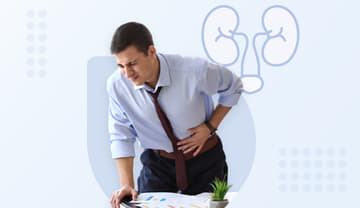
If the stone gets stuck in the ureter, it can block the urine flow from that kidney and cause cramping pain in the lower back, groin, or abdomen. Other symptoms may include blood in the urine, nausea, vomiting, foul-smelling urine, and frequent need to urinate.
Factors including dehydration, family history of kidney stones, obesity, and diet with high levels of protein and salt predispose to the formation of kidney stones.
Adequate hydration is a key preventive measure for kidney stones, which ensures that most kidney stones pass out via urine on their own with time. Treatment includes pain control medications and, in some cases, medications to ease the passage of urine. Surgical procedures are advised in case of larger stones that do not pass out themselves.
1. Small kidney stones
2. Large kidney stones
Kidney stones vary in size. While tiny stones are less likely to get stuck in the kidneys or other parts of the urinary tract, bigger stones can cause sharp, cramping pain in the back and the sides. This feeling often moves to the lower abdomen or groin.
The pain may last for a short or long time or come and go but can be quite intense.
Symptoms of kidney stones include:
Pink, red, or brown blood in your urine, also called hematuria
Pain during urination
Cloudy or bad-smelling urine
A constant need to urinate
Chills
Fever
For men, pain at the tip of the penis
Vague pain or stomach ache that doesn't go away
Nausea
Vomiting
Kidney stones are caused when the levels of minerals like calcium, oxalate, and phosphorus rise in the urine. Other factors that cause the development of kidney stones in the body include:
Dehydration
Diet (high in oxalate or uric acid)
Eating an excess of salt or sugar
Lack of exercise
High concentrated urine
Imbalance of pH in urine
Regular constipation
Genetic disorders
Kidney stones are made of different types of substances. They are discussed as follow:
Calcium stones are the most common type of kidney stones comprising about 80% of all urinary calculi. The main constituent of calcium stones is brushite (calcium hydrogen phosphate) or hydroxyapatite. The main portion of these stones may account for pure calcium oxalate (CaOx) (50%), calcium phosphate (CaP, termed as apatite) (5%), and a mixture of both (45%).
Struvite stones are referred to as infection or triple phosphate stones. They are composed of magnesium ammonium phosphate and form in alkaline urine. They occur among patients with chronic urinary tract infections.
Diets high in purines, especially those containing animal proteins such as meat and fish, result in excessive amounts of uric acid in the urine, low urine volume, and low urinary pH, increasing the chances of uric acid stone formation.
About 1 in 7,000 people worldwide get cystine kidney stones. It is a genetic disorder that results in impaired absorption of cystine or leaking of cystine into the urine.
Drugs, such as guaifenesin, triamterene, atazanavir, and sulfa drugs, induce the formation of these stones. These drugs may induce calculi formation by interfering with calcium oxalate or purine metabolisms.
Kidney stones are most likely to occur in people between the ages of 20 and 50 years. It has been found that men are much more likely to develop these stones than women.
Someone with a family history of kidney stones is more likely to develop the stones than someone without a family history.
The risk of the development of kidney stones is also three times higher in a person with a personal history of kidney stones.
Diet that is high in sodium, protein and sugar can increase the risk of certain types of kidney stones.
Inadequate amount of calcium in the diet is a major risk factor for the development of kidney stones. Low calcium diets increase urinary oxalate excretion, which may result in more stone formation and possibly a negative calcium balance.
This is the most common cause and may come from the loss of body fluids due to excessive exercise, working, or living in a hot place.
Obesity may change the acid levels in the urine, leading to stone formation. High body mass index (BMI), large waist size, and weight gain have all been associated with an increased risk of both a single episode and recurrent episodes of kidney stones.
What is body mass index? Learn more about it and how to calculate it.
In patients with chronic urinary tract infections, larger stones may form in the kidney. These are commonly called a struvite or infection stones.
Some medical conditions have an increased risk of kidney stones. Abnormal growth of one or more parathyroid glands, which control calcium metabolism, can cause high calcium levels in the blood and urine.
Another condition called distal renal tubular acidosis, in which there is acid build-up in the body can raise the risk of calcium phosphate kidney stones.
Some medications, calcium and vitamin C supplements, may increase your risk of forming stones. These include:
A healthcare practitioner will collect information regarding a person’s history of health conditions, family history of kidney stones, and the diet that is likely to aid in developing kidney stones. The physical examination includes:
1. General examination: In classical descriptions, a patient with renal colic (pain felt when kidney stones block the urinary tract) is continuously moving and twisting, unable to find a comfortable position. This is a common finding but not universal.Urologists often recommend several diagnostic tests to confirm the presence of kidney stones. These tests include:
1. Urinalysis: Urine tests can show whether the urine contains high levels of minerals that form kidney stones or not. It also shows white blood cells and bacteria in the urine that may indicate a urinary tract infection.Blood urea nitrogen (BUN) and creatinine test help in identifying any abnormal functioning in kidneys by determining the amount of nitrogen in the blood that comes from the waste product urea.
These tests may help to diagnose any issues that caused a kidney stone to form, such as a blockage in the urinary tract or any birth defects. These tests include:
If a person passes a stone or a stone is removed by surgery, testing the stone will determine its type. This information helps the healthcare provider to decide the best way to treat or prevent future stones.
A simple and most important lifestyle change to prevent stones is to drink more water and fluids. It's best to drink mostly no-calorie or low-calorie drinks and limit sugary and alcoholic drinks.
It is advisable to restrict salt intake ( ≤ 50 mmol/day of sodium chloride). A high sodium intake boosts stone risk by reducing calcium reabsorption in the kidneys and increasing urinary calcium.
People having calcium stones are recommended to avoid dairy products and other foods with high calcium content unless advised otherwise.
A reduced intake of calcium can also lead to increased intestinal absorption of oxalate, which itself accounts for an increased risk of stone formation.
Hence, it is advised to eat the right recommended amount of calcium in diet or supplements.
Limit the consumption of foods high in oxalate. These food items include peanuts, spinach, beetroots, chocolate, and sweet potatoes.
It is not necessary to completely stop eating foods that contain oxalate; however, the level of oxalate intake should be decreased.
Doctors that can help with kidney stones include:
General physician
Nephrologist
Urologist
A nephrologist specializes in kidney diseases and their functions. A urologist specializes in urinary tract disease.
If you are facing any health issues, seek advice from our healthcare professionals.
These stones are typically excreted out from the body on their own without considerable treatment. Intake of sufficient amounts of water (4-5 liters a day) may help flush out the stone via the urine. Different medications that can be used for assistance during the removal of these stones are:
Medications
Nonsteroidal anti-inflammatory drugs (NSAIDs): These are used to relieve the pain caused by the stone movement. A few examples include:
Anti-sickness medicine: These drugs are used in case of nausea and vomiting. They include:
Alpha-blockers : They help in relaxing the muscles of the ureter and facilitate the passage of stones from the kidney. These drugs are:
Diuretics: These drugs increase the urine flow, and may also flush out the stone of <5 mm in size. Examples of a few diuretics are:
Ethacrynic acid
If the kidney stones are too big to be passed naturally, they're usually removed by surgery.
Surgery
Medications
Certain medications are also prescribed along with surgeries for larger stones, depending on the type of stone:
People with hyperparathyroidism, a condition that results in too much calcium in the blood, sometimes develop calcium stones. Removing the parathyroid gland cures hyperparathyroidism and can prevent kidney stones.
Hyperparathyroidism can cause many symptoms in the body, including unexplained weight loss. Watch this video to know more
Here are a few home remedies that can help in managing kidney stones:
Lemon juice (Nimbu): Lemons contain citrate, which is a chemical that prevents calcium stones from forming. Citrate can also break up small stones, allowing them to pass more easily. Consumption of half cup of lemon juice per day will increase citrates in the urine.
Water consumption: Drinking water helps speed up the process of passing a stone. Drink at least 12 glasses of water if you are trying to pass a kidney stone.
Green tea: Green tea is rich in antioxidants and possesses a protective effect against the development of calcium stones in the kidneys.
Kidney beans (Rajma): High levels of fiber in kidney beans and broth from cooked kidney beans help improve overall urinary and kidney health. It also helps dissolve and flush out kidney stones.
Celery: It has antispasmodic (that suppresses muscle spasms) properties and also helps in cleansing the toxins from the body.
Dandelion: Organic dandelion roots help cleanse the kidneys and support normal kidney functioning. Taking 500 mg of dried dandelion extract or drinking dandelion tea may help ease the symptoms and prevent the formation of kidney stones.
Wheatgrass: It is a rich source of many vital nutrients. A glass of wheatgrass juice with lemon extract is a perfect way to sort out kidney stones.
Pomegranate juice (Anar): This juice acts as a natural detoxifying agent that helps get rid of kidney stones causing impurities. Try to consume fresh pomegranate juice each day without added sugar.
Raspberry: This fruit is capable of expelling stones from the urinary tract. The prophylactic effect of raspberry has been reported on calcium oxalate renal stone formation.
Fenugreek seeds (Methi dana): It has been usually seen that fenugreek seeds significantly reduce calcification in the kidneys and help prevent kidney stones.
Black cumin seed (Jeera): This herb significantly reduces the formation of calcium oxalate stones.
Radish (Mooli): Roots of radish plant are highly effective in breaking kidney stones.
Tamarind pulp (Imli): Tamarind has shown beneficial effect in inhibiting spontaneous crystallization during the formation of kidney stones.
Baking soda: It helps in maintaining an alkaline environment in the body. The stones get enhanced in an acidic environment and baking soda aids in their removal. Mix half a teaspoon of the baking soda with apple cider vinegar and consume the solution twice a day.
Read more about effective natural remedies that can help in getting rid of kidney stones.
1. Asparagus (Shatavari): Leaves of this plant are useful in expelling stones from the urinary tract and inhibiting the formation of calcium oxalate stones.
2. Crataeva nurvala (Varuna): The part of the plant used is the roots. Its pharmacological properties include being a lubricant, diuretic, and lithotriptic.
3. Tribulus Terrestris (Gokshura): This herb is commonly used in India to treat urinary tract diseases.
4. Hogweed (Punarnava): This Indian weed is used to help expel kidney stones.
5. Hibiscus (Gudhal): Drinking a cup of tea made from this herb significantly increases the excretion of uric acid and the clearance of kidney stones by urine.
6. Indian nightshade (Kantakari): It is a widely used edible medicinal plant in India, and is also known as the yellow berried nightshade plant. This plant is used as a remedy for the treatment of various renal diseases, including kidney stones.

7. Horse gram (Kulthi): It is a nutritional and medicinal plant native to India. Its seeds are used to prepare soup which decreases the formation and recurrence of calcium oxalate stones.
8. Indian madder (Manjistha): This is a species of flowering plant in the coffee family, and is used as a natural food colorant. The roots of manjistha are beneficial in reducing the risk of kidney stones. They work by reducing the level of calcium and oxalate in kidneys and inhibiting the growth of urinary stones.

Check out our extensive range of ayurvedic products.
Smaller kidney stones may not cause much problems and can be managed with certain simple lifestyle modifications. Here are some of the tips to apply when living with kidney stones: