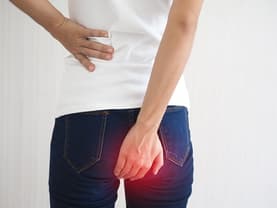
An anal fissure is a cut, crack, tear or open sore in the lining of the anus (the opening through which stools pass out of the body) that extends upwards into the anal canal.
Symptoms include bleeding, burning sensation, and pain during and after passing stools. The various causes of an anal fissure include constipation, long-term diarrhea, pregnancy, childbirth, or sometimes an underlying medical condition.
An anal fissure can be prevented by changing eating and lifestyle habits. Eat a high-fiber diet, including legumes, vegetables, fruits, and whole grains. Keep yourself well hydrated, restrict the consumption of alcohol and caffeine, stay active and exercise, and avoid holding on to the urge to pass stools.
Treatment depends on the severity; in most cases, anal fissures will improve on their own. To provide symptomatic relief, your doctor may recommend topical creams and medications. Surgery may be considered in whom non-surgical treatments have proven to be ineffective.
Overview
Key Facts
Symptoms
Causes
Types
Risk factors
Diagnosis
Prevention
Specialist to visit
Treatment
Home-care
Complications
Alternatives therapies
Living with
FAQs
References
Frequently Asked Questions
Generally, it feels like a sharp pain or passing broken glass. Symptoms of anal fissures are a sensation of burning, tearing, ripping, or sometimes itching, and usually a small amount of bleeding during and after a bowel movement.
Piles and anal fissures are two different anorectal conditions. Pile is a cluster of inflamed tissues, muscles, blood vessels, and veins, primarily painless. Fissures are a tear or a crack in the lining of the anus, mainly causing pain and bleeding.
The only permanent treatment for chronic anal fissures is undergoing surgery known as lateral internal sphincterotomy (LIS), which involves making a small incision of the anal sphincter muscle to reduce pressure and spasm and further promote healing.
The pain and discomfort go away when this cut starts to fill back, which is a sign of fissure healing. Most anal fissures heal with home remedies, while some long-term anal fissures heal after surgical treatment.
In our relentless endeavour to keep improving our services, you are our eyes. Kindly take out sometime to guide us on how to serve your better.
Subscribe to stay informed
Subscribe to our carefully crafted informative emailers by Medical Experts and be the first to get the latest health news, tips and important updates.
Want to know more?We provide you with authentic, trustworthy and relevant information
Have issues with the content?
Disclaimer
Tata 1mg's sole intention is to ensure that its consumers get information that is expert-reviewed, accurate and trustworthy. However, the information contained herein should NOT be used as a substitute for the advice of a qualified physician. The information provided here is for informational purposes only. This may not cover all possible side effects, drug interactions or warnings or alerts. Please consult your doctor and discuss all your queries related to any disease or medicine. We intend to support, not replace, the doctor-patient relationship.
You may be suffering from anal fissure if you have the following signs and symptoms:
Pain, sometimes severe, during or after bowel movements that can last up to several hours
Blood stains on the stool or toilet paper after a bowel movement
A visible crack or tear in the skin around the anus
A small lump on the skin near the anal fissure
Burning and itching sensation around the anus
Discomfort when urinating or painful urination
Foul-smelling discharge
Causes Of Anal Fissures
An anal fissure is a tear, open sore, or cut in the anus that develops in the lining of the large intestine around the anus and is mainly caused by injury to the area. This can happen when you pass a hard, dry, large stool. Along with this, several risk factors may lead to anal fissures or increase the likelihood of the disease.
Though they both can cause similar symptoms, they are different conditions. Anal fissures are tiny cracks or tears present in the anus area while piles are mainly the swollen blood vessels. Just like anal fissures, people suffering from piles have to maintain an intake of a fiber-loaded diet to prevent painful, hard stools.
Read to know more about other common problems of the anal area which can be real trouble.
Types Of Anal fissures
There are two types of anal fissures classified based on their causes. They include:
Primary fissure: Primary fissure is non-threatening, looks like a tiny fresh tear, and gets healed within six weeks. This is usually caused by constipation, long-term diarrhea, or anal intercourse.
Secondary fissure: This kind of fissure is also known as chronic anal fissure, which has a more profound tear or cut and may have internal or external tissue growth-like lesions. A secondary fissure lasts more than eight weeks and may return if not treated properly. These fissures are often seen in patients with prior surgeries in the anus, patients with inflammatory bowel disease, or colon cancer.
Risk factors Of Anal fissure
Constipation
It is a condition in which large, hard, and dry stools are difficult or painful to pass. Constipation is more likely to cause lesions in the anal region during a bowel movement.
Here is an informative video about various causes of constipation and their effective management.
Chronic diarrhea
Diarrhea can also cause fissures by drying the skin until it cracks open. As the anal skin is very sensitive, prolonged diarrhea can cause an anal fissure, leading to severe pain.
Read more about what to eat and what to avoid if you have diarrhea.
Pregnancy and childbirth
Pregnant women tend to develop anal fissures toward the end of their pregnancy. The lining of the tissues in the anal area may also tear during childbirth.
Pregnant women suffer from constipation. Here are a few tips which can help you manage constipation during pregnancy.
Muscle spasms
The spasm of anal muscles can lead to the tearing of the inner lining of the anus during bowel movements. This can lead to the development of a chronic anal fissure.
Anal intercourse
Any trauma to the anal tissue can lead to an anal fissure. There is a high risk of developing anal fissures during rough anal intercourse, or putting things into your anus can overstretch the skin and cause a fissure.
HIV
HIV-associated anal lesions are the most disabling of anal diseases in HIV+ patients. Clinically anal fissure results in pain with defecation, but HIV-associated anal lesions are more likely to result in disabling pain unrelated to bowel movements.
Tuberculosis
Anal tuberculosis can cause non-healing and recurrent ulcer-like fissures in the anal region.
Other conditions
Some conditions that may cause anal fissures to include:
Crohn's disease ( a type of inflammatory bowel disease that causes swelling of the digestive tract)
Ulcerative colitis (an inflammatory bowel disease (IBD) that causes swelling and ulcers in the digestive tract)
Other inflammatory bowel diseases in the anal area.
STDs (sexually transmitted diseases) like syphilis, gonorrhea, chlamydia, chancroid
Minor trauma in the anal region caused by mountain biking, insertion of a rectal thermometer, enema tip, or ultrasound probe.
Weight loss surgery can induce explosive diarrhea.
Diagnosis Of Anal fissures
Minor anal fissures may not cause many problems and heal on their own. However, chronic cases may need attention. Diagnosing the cause can help with the treatment plan as well. Diagnosis consists of the following:
1. Medical history
The doctor will take a detailed medical history of the patient’s symptoms, eating habits, toilet habits, and medicines taken for past or current health conditions.
2. Physical examination
This involves a visual inspection of the anal region by gently separating the buttocks. If separating the buttocks does not reveal a fissure, a more vigorous rectal examination might be required. It is done after the application of a topical anesthetic to the anus and anal canal. A cotton-tipped swab may be gently inserted into the anus to localize the source of pain.
3. Colonoscopy or sigmoidoscopy
If rectal bleeding is present, an endoscopic evaluation is necessary to exclude the possibility of a more serious disease of the anus and rectum such as colon cancer or solitary rectal ulcer syndrome (which causes rectal bleeding and straining during bowel movements). A tiny, flexible tubular device is inserted into the anus to inspect the entire colon.
We should never ignore the early signs of any disease. And the best way to identify it is an annual preventive health checkup. What are you waiting for?
Prevention Of Anal fissure
The following preventive measures and tips can help prevent anal fissures:
Eat a diet rich in fiber
Fiber improves stool consistency and adds bulk to bowel movements. Intake of foods rich in fiber, such as fruits, vegetables, legumes, nuts, and whole grains, greatly reduces the risk of getting constipation and thereby anal fissures. A minimum of 18 grams of fiber is recommended for adults daily.
Here is your guide to a fiber-rich diet that improves your bowel movements. Read about superfoods that relieve constipation.
Stay hydrated
Keep yourself hydrated. Drink a minimum of 8 glasses of water, as it will help to make you pass stools easily and less prone to anal fissures. Limit your intake of alcoholic and caffeinated drinks because they can dehydrate your body.
Not just water, these healthy drinks can also up your hydration game.
Do not hold on to the urge to pass stools
Holding stools for too long can strain your anal muscles and make your stool hard and dry to pass, predisposing it to constipation and anal fissures.
Be mindful while taking laxatives
Do not take laxatives without the recommendation of your doctor. Ensure that you use them only for a short period of time and to treat occasional constipation.
Here is a comprehensive guide to laxatives. Learn about various types of laxatives and tips to use them.
Stay active
Keep yourself physically active and exercise regularly, as it will help to boost your metabolic rate and fight constipation. Aim for 10,000 steps every day.
No time to hit the gym? Stay in shape even by ditching the gym.
Specialist To Visit
Doctors/specialists who can help in the diagnosis and treatment of anal fissures are:
General Physician
Gastroenterologists
Proctologists
Pediatrician(in case of children)
A gastroenterologist is a medical practitioner who diagnoses and treats disorders of the gastrointestinal tract and related organs. A proctologist is a doctor who specializes in treating conditions of the colon, rectum, and anus.
When to see a doctor?
In most cases, an anal fissure can clear up on its own. However, consult a doctor if you have
Chronic constipation
Severe pain while passing stools
Blood, along with stool
If you are facing any of the symptoms mentioned above, don't ignore them. Please book your appointment and speak with our experts now.
Treatment Of Anal fissure
Treatment for anal fissures mainly includes medicines and dietary changes to soften the stools or stimulate its movement through the colon.
Medications
Topical anesthetic ointments: Patients with anal fissures get relief by applying topical anesthetics such as lidocaine hydrochloride creams to the affected area. You can either use over-the-counter topical agents or those prescribed by the doctor.
Nitroglycerin: Application of nitroglycerin ointment to affected areas or fissures increases blood flow to the damaged tissues. This, in turn, can speed up healing and relieve anal sphincter muscle spasms.
Calcium channel blockers (CCBs): CCBs like nifedipine or diltiazem, reduce blood pressure and relieve the anal sphincter muscle spasm. These can be taken orally or used topically on the affected area.
Botox injections
In case medications are not effective, botox injections can be used to treat secondary anal fissures. They work by paralyzing the anal sphincter muscles and relieving muscle spasms.
Surgery
If an anal fissure does not respond to medicines, your doctor may recommend surgery. This procedure is known as lateral internal sphincterotomy (LIS), which involves making a small incision in the anal sphincter muscle to reduce spasms and promote healing.
Home care For Anal Fissures
The home remedies mentioned below help relieve constipation, allowing the fissures to heal and prevent them from worsening. Along with drinking enough water and being physically active, try these for better results:
Keep constipation at bay
Constipation is the main culprit for anal fissures. It can both cause and delay the healing of anal fissures. Hence it is imperative to manage constipation.
Struggling to deal with constipation?Learn about practical ways to manage constipation.
Try a sitz bath
A sitz bath or hip bath is nothing but a warm water bath that can promote the healing of an anal fissure. You can take a sitz bath with warm water for at least 20 minutes twice daily. The bath should only cover the hips and can be taken with the help of a kit or in the bathtub.
Keep the anal area lubricated
You can try the following to keep the anal area moisturized and lubricated to aid in the easy passing of stools. It is always wise to take consent from your doctor before trying these out.
1. Petroleum jelly: Applying petroleum jelly around the anal region can help to lubricate and soothe the skin. Once it is lubricated properly, there are fewer chances of straining and bleeding while passing stools.
2. Aloe vera:It is a plant with healing and pain-relieving properties. Research has found that applying natural aloe vera gel to the affected area can effectively manage chronic anal fissures.
3. Coconut (Nariyal): Coconut oil has excellent healing properties and also works as a natural lubricating agent. Applying coconut oil around the anal region twice a day helps in dealing with anal fissures.
4. Olive oil (Jaitoon ka tel): Olive oil is a rich source of monounsaturated fats. It helps in lubrication, allowing hard, dry stools to pass without discomfort. It also has anti-inflammatory properties, which ease the pain caused by anal fissures.
In a study, it has been found that patients with anal fissures reported reduced pain, bleeding, and itching after applying a natural mixture of olive oil, honey, and beeswax.
5. Castor oil (Arandi ka tel): Not only is castor oil an excellent natural laxative when consumed with milk, but you can also apply it to the anal fissure region to alleviate pain and easy defecation.
Looking for body oils? Try our extensive range.
Complications Of Anal fissure
Complications of anal fissure can include:
Failure to heal: An anal fissure gets fixed within six weeks, but in a few cases, some fail to heal within eight weeks, which are considered chronic ones. Surgery is the best way to treat chronic anal fissures.
Relapse: Once you've experienced an anal fissure, you are at high risk of having it again or another one.
Anal fistula: An untreated or unhealed anal fissure can cause infection, leading to an anal fistula. An anal fistula is an infected tunnel between the skin and the anus, causing severe pain, swelling, and discharge of blood or pus from the anus.
Alternative Therapies Of Anal fissure
Anal fissures can be very painful and discomforting and interfere with a person's daily work. Alternative therapies can be used as an adjunct to conventional treatment.
Yoga
You can try yoga poses as they help you manage your symptoms, like easing bowel movements and keeping constipation in check. Some of the most beneficial ones include:
Viparita Karani (legs-up-the-Wall Pose)
Trikonasana (standing pose)
Dhanurasana (bow pose)
Matsyasana (fish pose)
Anjaneyasana (crescent pose)
Pavanamuktasana (wind-relieving pose)
Balasana (child's pose)
Living With Anal fissure
Anal fissures are very common. At the same time, most are self-healing and can be managed by home care. However, in some cases, medications or surgical approaches are required. Here are a few points that could help you deal with anal fissures in your daily life.
Regular warm sitz baths will help you decrease anal fissure pain and discomfort. Keep your bathtub clean after every use. Always use clean and dry towels. This will block any risk of infection.
Avoid using scented soap and shower gels, as they can cause irritation and make your fissures worse. Instead, use non-perfumed soaps formulated for sensitive skin.
Sitting too long on the toilet seat can increase the pressure on your lower rectum, especially on the veins in the anus region. Straining during a bowel movement increases the risk of repeated tears and interferes with healing.
Always gently clean the anus region after defecation to prevent irritation or infection.
Avoid consuming refined or processed food items. It will only exacerbate your symptoms.
Always keep yourself hydrated and include fiber-rich food in your meals.
Certain medicines, like iron supplements, antacids, etc., can cause constipation, predisposing to anal fissures. Your doctor may change your medication with another one that doesn’t cause constipation. Always inform your doctor about the changes you may experience while taking a specific pill.
Did You Know?
As per ancient yogic texts, there are 84 Lakh yoga asanas present. However, only some of them are known and practiced. Read more about its benefits.