How can we help?
Rapid Plasma Reagin

Rapid Plasma Reagin

Also referred as
Syphilis Detection Test
Syphilis Serology
For men & women
Earliest reports in
48 hours
Contains
1 test
Know more about this test

The rapid plasma reagin (RPR) test is a blood test that looks for antibodies against a bacterial infection called syphilis. This test doesn't detect the actual bacteria that cause syphilis. Instead, it looks for antibodies against substances given off by cells that have been harmed by the bacteria.


It is used to screen for active syphilis infection and monitor response to treatment. Non-reactive RPR tests without clinical evidence of syphilis may suggest no current infection or an effectively treated infection. A false positive RPR (means positive results in the absence of syphilis) can be encountered in tuberculosis, malaria, and viral pneumonia. A reactive RPR test suggests past or present infections with the bacteria that cause syphilis. If not detected, syphilis can stay in the body for years and cause harm to internal organs.

Find out
Why is this test booked?
Preparation for this test
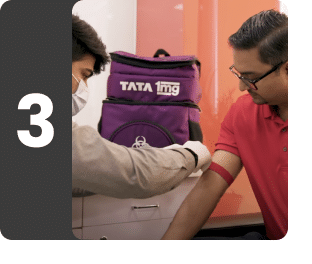
Sample Collection
Who will collect your samples?

What does Rapid Plasma Reagin measure?

Syphilis is a sexually transmitted disease (STD), caused by the bacteria Treponema pallidum. It is most commonly spread by sexual route (through contact with syphilis sore (Chancre)). Syphilis is easily treatable with antibiotics. However, it can cause severe health problems if left untreated and can be potentially fatal. Maternal transfer to unborn child through an infected mother can cause serious and potentially fatal consequences for the baby.

There are several stages of syphilis:

·       Primary syphilis: Primary stage starts 2-3 weeks after being infected. It usually appears as one or more painless chancres on the sexual partner's chancre exposed body parts such as on the penis or vagina. Since it is painless, it may go unnoticed, especially if it is in the rectum or on the cervix. It usually disappears within 4-6 weeks even without any treatment.

·       Secondary syphilis: Primary syphilis can progress to secondary syphilis if the infected person is left untreated. The symptoms generally develop from 6 weeks to 6 months after the chancre first appears. It is mainly observed as non-itchy skin rash (rough, red, and spotted), appearing typically on the palms of the hands and the bottoms of the feet. Other associated symptoms could be fever, fatigue, swollen lymph nodes, sore throat, and body aches.

·       Late or tertiary syphilis: Secondary syphilis can progress to late or tertiary stage if it is further left untreated. In this, an infected person may remain without any symptoms (asymptomatic) but continues to have the infection and can last for years. There are various complications associated with tertiary syphilis which can occur if still left untreated such as the bacteria can damage the heart, eyes, brain, central nervous system (Neurosyphilis), bones, joints, or almost any other part of the body. Tertiary syphilis can last for years, with the final stage leading to mental illness, blindness, other neurological problems, heart disease, and death.


FAQs related to Rapid Plasma Reagin

There are other tests available that are required for the diagnosis of syphilis such as: 1. Antibody tests (serology): Antibody tests are most commonly used and they detect antibodies in the blood and cerebrospinal fluid (CSF). In this, there are two types of tests available for syphilis testing, nontreponemal antibody test and treponemal antibody test. Any of these two types can be used for syphilis screening, but it must be followed by a second test that uses a different method to confirm a positive result and to diagnose active syphilis. · Nontreponemal antibody tests—These are called "nontreponemal", as they detect antibodies that are not specifically targeted against the syphilis bacteria Treponema pallidum. Besides syphilis, these antibodies can also be produced in several other conditions (false-positive results). The tests are highly sensitive but are non-specific in nature. False-positive results can be seen in IV drug use, pregnancy, Lyme disease, certain types of pneumonia, malaria, tuberculosis, or certain autoimmune disorders including lupus. A positive screening result must be confirmed with a more specific (treponemal) test. Nontreponemal tests include RPR (Rapid Plasma Reagin) and VDRL (Venereal Disease Research Laboratory) test. · Treponemal antibody tests: These blood tests detect antibodies that specifically target Treponema pallidum. They are highly specific for syphilis. However, once a person is infected and these antibodies develop, they remain in the blood for life. On the other hand, nontreponemal antibodies typically disappear in an adequately treated person after about 3 years. Therefore, a positive treponemal screening result must be followed by a nontreponemal test (such as RPR) to differentiate between an active infection (or reinfection) and one that occurred in the past and was successfully treated. Treponemal antibody tests include FTA-ABS, TP-PA, and MHA-TP. FTA-ABS (Fluorescent treponemal antibody absorption) test is used to diagnose neurosyphilis. However, TP-PA (T. pallidum particle agglutination assay) test is sometimes performed instead of FTA-ABS because it is more specific and there are fewer false positives. MHA-TP (Microhemagglutination assay) test, another confirmatory method, is used much less commonly now. Immunoassays (IA): in more recent years, several automated tests have been developed, making them convenient for screening purposes. 2. Direct detection of bacteria—These tests are less commonly used now. Dark field microscopy is used in the early stages of syphilis when a suspected syphilis sore (chancre) is present. It involves obtaining a scraping of the sore, placing it on a slide, and examining it with a special instrument called a dark-field microscope. 3. Molecular testing (polymerase chain reaction, PCR): This test detects genetic material from the bacteria in the sample from the sore, in blood, or in CSF.

False negative test results mean that RPR test is negative in the presence of syphilis infection. The body does not always produce antibodies specifically in response to the syphilis bacteria, so the test is not always accurate. False-negatives may occur in people with early- and late-stage syphilis. Hence, other tests are required to confirm the results.
There is no risk associated with the test. However, since this test involves a needle prick to withdraw the blood sample, in very rare cases, a patient may experience increased bleeding, hematoma formation (blood collection under the skin), bruising or infection at the site of needle prick.
Syphilis is most contagious during the first two stages and the early latent stage. It can spread through sexual route, therefore, it is known as sexually transmitted disease (STD). It can enter the body through the genitals, mouth, or broken skin. A pregnant woman infected with syphilis can pass it on to her baby.
False positive means positive results in the absence of syphilis. RPR test detects non-treponemal antibodies. This test is not specific for syphilis, although it is highly sensitive. A false positive RPR can be encountered in infectious mononucleosis, tuberculosis, leprosy, malaria, lupus erythematosus, vaccinia, and viral pneumonia. Pregnancy, autoimmune diseases, and narcotic addictions may give false-positives. Pinta, yaws, bejel, and other treponemal diseases may also produce false-positive results with this test.

Rapid Plasma Reagin test price for other cities

Price inAhmedabadRs. 149
Price inAllahabadRs. 149
Price inBangaloreRs. 149
Price inBhopalRs. 149
Price inChennaiRs. 149

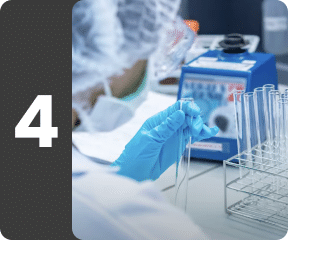
How does home sample collection work?

Download the Tata 1mg app. Trusted healthcare, at your fingertips.

Book tests, track reports, and get AI-powered health insights.

or
Conducted by
Tata 1mg Labs
ISO certified
Accredited labs
Highly skilled Phlebos
Verified reports
Who will collect your samples?
Tata 1mg certified phlebotomists
Contains 1 test
Rapid Plasma Reagin